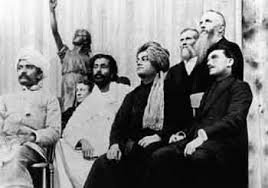
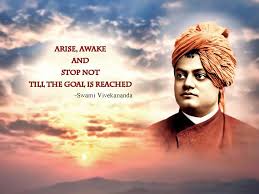
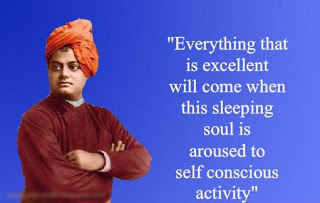
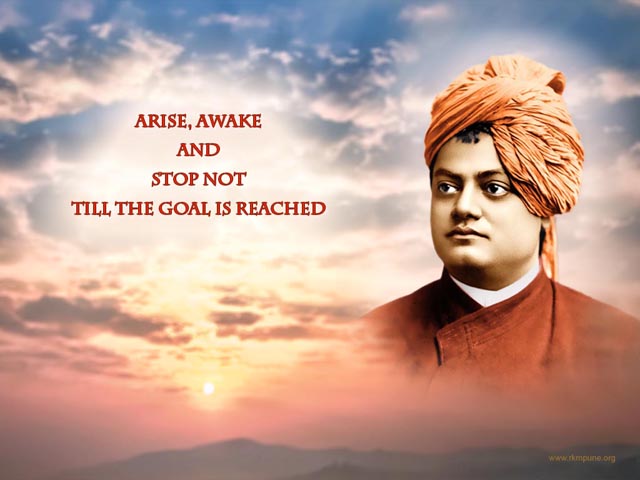
The most ancient tradition [in India] has been one in which the good work done for the assistance of the fellow man does not necessarily have anything to do with etaphysical contemplation. As far as we know, Vivekananda was the first in India of any social influence to declare that these two things should go together. He wanted his fellow monks of the Ramakrishna Mission, not only to read Sanskrit and contemplate higher reality, but also to work in such things as famines and floods, and in the eternal poverty of the Indian cities. If you read Vivekananda you will find some excoriating remarks about those who devote themselves entirely to their own spiritual welfare and forget the existence of their fellow creatures. He introduced into the monastic system of India this principle of the assistance to those who needed it most, that principle which was never so expressed before. And so on my first trip [to India], in 1947, before I had ever been to Belur or Dakshineshwar, I found monks of the Ramakrishna Mission taking care of the wounded and the refugees in the tremendous upheaval which followed the partition of India. Monks of the Ramakrishna Mission were doing that work in all parts of the country and on a very considerable scale, as they do in ordinary times with their schools, hospitals, and refectories. This principle, which is implict in everything Ramakrishna said, everything of which we have record, he was not himself fitted to carry out. It was not his quality, his nature, but it was eminently the quality of Swami Vivekananda. He was able, possibly because of his visits to the West, to introduce that the element into the Mission, of which it has borne the imprint ever since and from which very great good has resulted for the most miserable of the peoples of India.