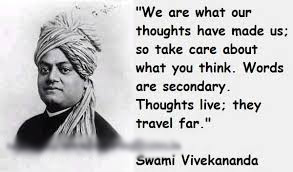
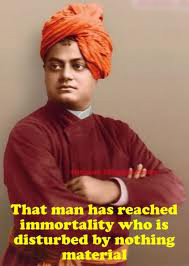
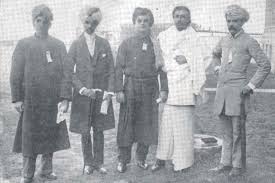
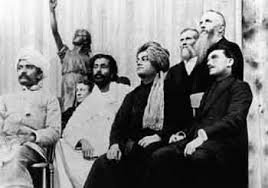
Vivekananda stands out as the most renowned philosopher and social figure of India in modern China. His philosophical and social thought and epic patriotism not only inspired the growth of nationalist movement in India, but also made a great impact abroad. In 1893, Vivekananda visited Canton and its neighbourhood. He noted his impressions of the visit in a letter addressed to the citizens of Madras. He had some knowledge and understanding of Chinese history and culture. He often cited and spoke highly of China in his writings and speeches. He made a prophecy that the Chinese culture will surely be resurrected one day like the ‘Phoenix’ and undertake the responsibility of the great mission of integrating the Western and the Oriental cultures. His biographer Romain Rolland has narrated the evolution of Vivekananda’s idea on this aspect. When Vivekananda went to America for the first time, he hoped that country would achieve this mission. But during his second visit abroad, he realized that he was deceived by dollar imperialism. He, therefore, came to the conclusion that America could not be an instrument to accomplish this task, but it was China which could do it. Vivekananda had infinite sympathy for the Chinese people living under the oppression of feudalism and imperialism : and he pinned much hope on them. After his visit to China, he made a very interesting comment. He said: ‘The Chinese child is quite a philosopher and calmly goes to work at an age when your Indian boy can hardly crawl on all fours. He has learnt the philosophy of necessity too well.’ This shows Vivekananda’s enormous sympathy towards the miseries of the children of China in the oldsociety. While explaining his visionary socialism Vivekananda made an interesting ‘gospel’. He said that the future society would be ruled by the labouring people and that this would first take place in China. In Modern India he said : ‘But there is hope. In the mighty course of time, the Brahmin, and the other higher castes too, are being brought down to the lower status of the øådras and the øådras are being raised to higher ranks. ...Even beforeour eyes, powerful China with fast strides, is going down to øådrahood,... yet, a time will come when there will be the rising of the øådra class, with their øådrahood, ... a time will come when the øådras of every country... will gain absolute supremacy in every society. ... Socialism, Anarchism, Nihilism, and other like sects are the vanguard of the social revolution that is to follow.’ From the material cited above and his life and works, we can see at least that Vivekananda showed very much concern for, and sympathized with, the people of China who were living under the rule of feudalism and imperialism and placed great hopes on them. But we do not agree with B. N. Datta that the success of the Chinese and the Russian revolutions coming into being at concrete historical moments should be credited to the ‘gospel’ of Vivekananda. This would make him a divine mystique personality. We have seen that Vivekananda’s approach to the laws of social developments was unscientific. However, it is not possible for any advanced thinker to make a correct prediction of the phases and events of the progress of history in every minute details. We should, therefore, appraise Vivekananda in the light of seeking truth from facts. In conclusion, Vivekananda was the most eminent figureamong the democratic patriots in India. He paid high tributes to our glorious ancient culture and loved the Chinese labouring people. We pay homage to him.